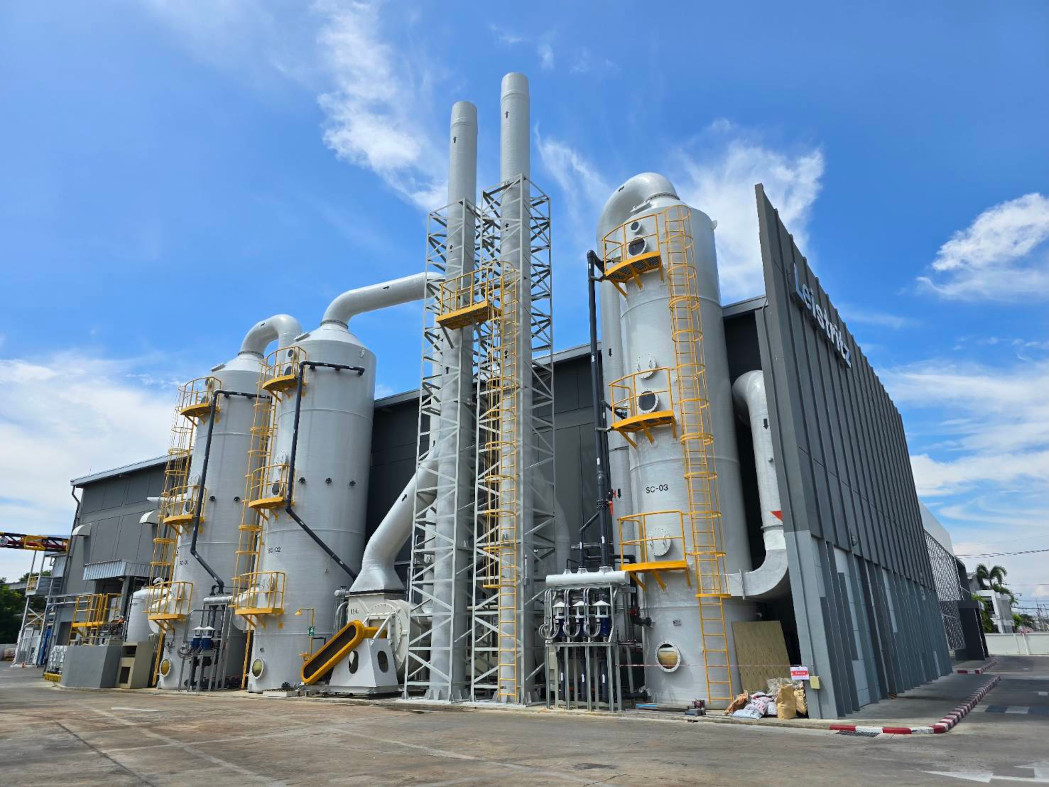
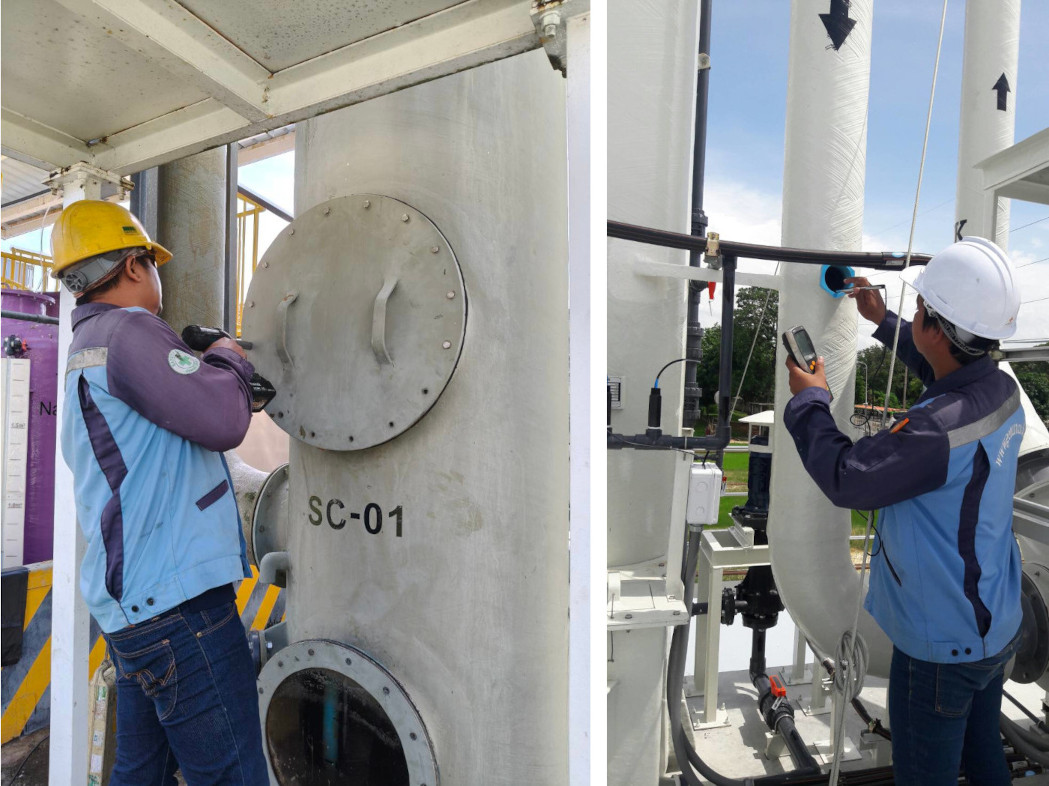
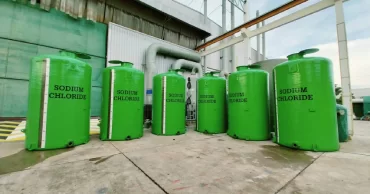
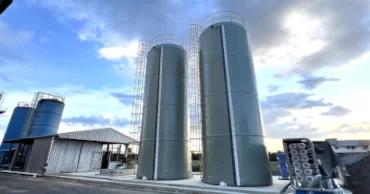
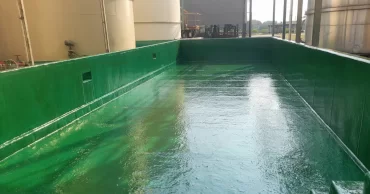
Maintenance is a crucial part of any Wet Scrubber air pollution control system, which is designed to remove acidic gases, chemical vapors, and fine particulates generated from industrial processes. Proper and consistent maintenance ensures the system operates efficiently, extends the lifespan of equipment, reduces repair costs, and keeps emission levels within environmental standards.
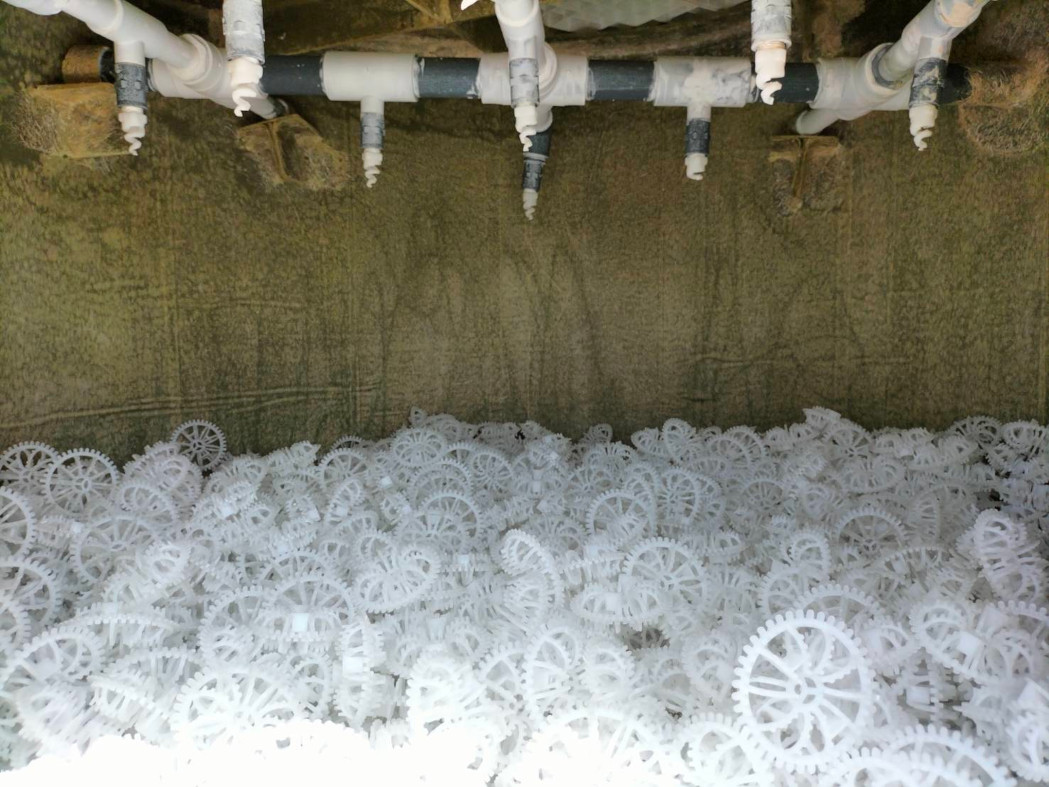
1. Regular Inspection of Spray Nozzles
- Clean the spray nozzles every month to prevent clogging.
- Check that the water pressure in the Wet Scrubber system remains within the standard range.
- Replace any nozzle showing signs of corrosion or wear that may affect spray performance.
2. Control of Water Quality and pH Levels
- Measure the pH level of the scrubbing liquid daily, especially during high pollution loads.
- Regularly clean and calibrate pH and conductivity sensors according to the recommended maintenance schedule.
3. Inspection and Maintenance of Pumps (Water Pump / Chemical Pump)
- Check the pressure reading at the Pressure Gauge, ensuring it remains between 1.7–2.3 bar during operation.
- Inspect for any water or chemical leaks around the pump and clean the strainer regularly to prevent blockage.
Regular maintenance of circulation and chemical dosing pumps helps maintain the water flow and treatment efficiency of the Wet Scrubber air pollution control system, ensuring consistent performance and reliability.
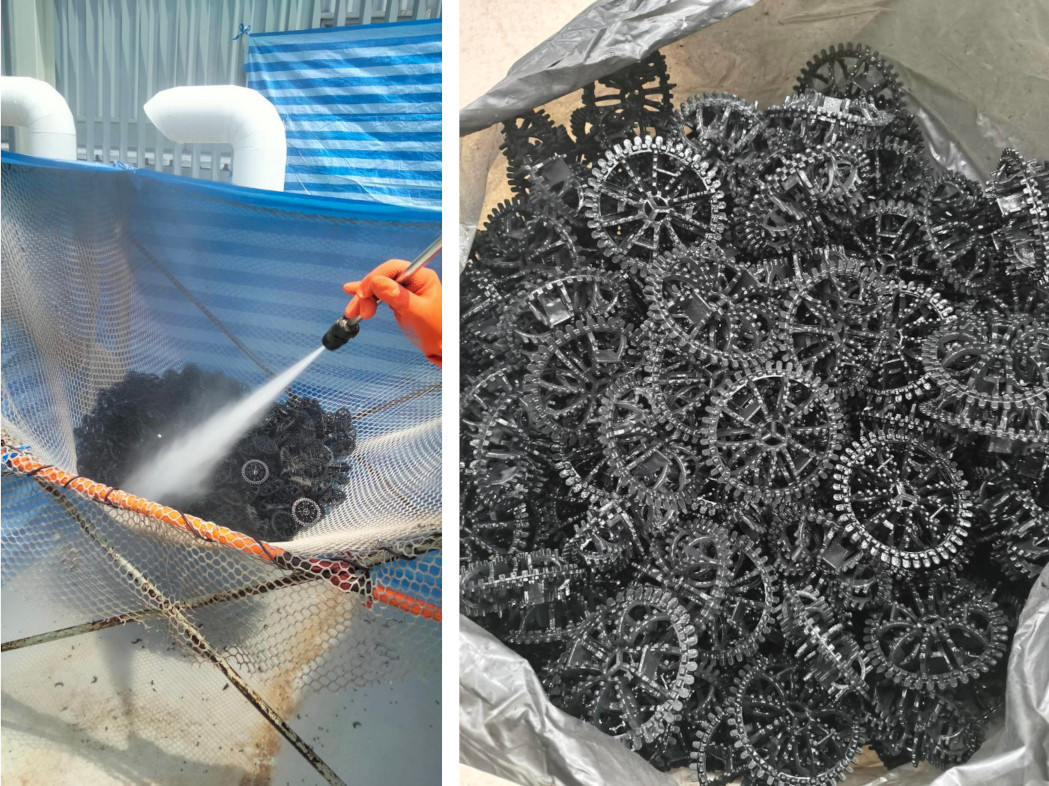
4. Inspection of Scrubber Media
- Inspect the packing media every six months to check for collapse, breakage, or degradation. Replace or refill to maintain the designed packing height.
- Clean the media at least once or twice a year to remove scaling and accumulated dirt.
- Use the manhole openings to inspect internal corrosion or damage to the scrubber body and internal components.
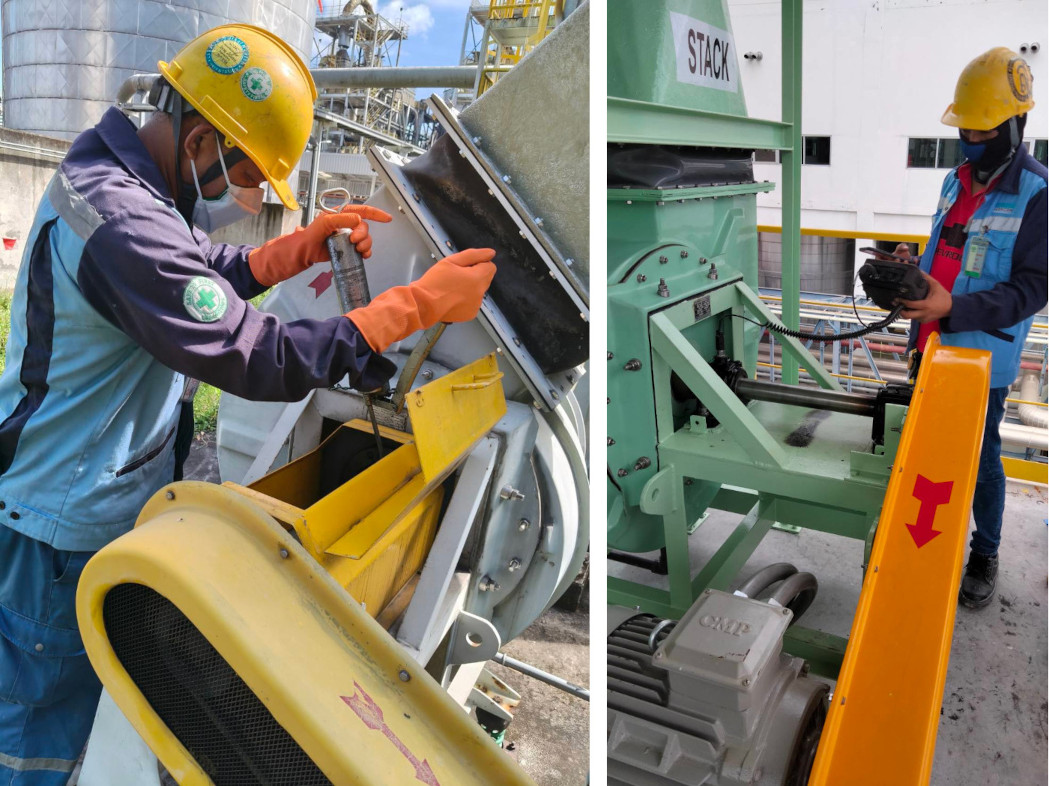
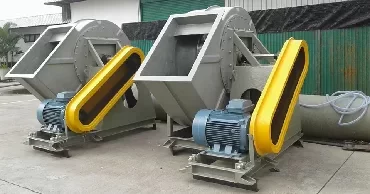
5. Inspection of Blower and Ducting System
- Check the motor and bearings for abnormal noise or vibration.
- Verify the lubrication level of bearings and adjust belt tension as necessary.
- Ensure all bolts and connections are properly tightened and inspect the power supply for voltage stability.
6. Overall System Inspection of the Wet Scrubber
- Regularly clean the strainer installed in the water piping line.
- Inspect joints, pipes, and flanges for leaks within the air pollution control system.
- Check for corrosion in spray lines, air ducts, and scrubber housing.
- Verify the operation of all measuring instruments — including pH probes, flow meters, and sensors — and calibrate them periodically.
Comprehensive inspection of the Wet Scrubber air pollution control system minimizes the risk of equipment failure and enhances operational safety.
Performing Preventive Maintenance (PM) at least once or twice a year helps ensure that your Wet Scrubber air pollution control system operates at peak performance — preventing clogging, corrosion, and excessive emission levels. Regular maintenance not only enhances environmental compliance but also reduces long-term operational risks and costs.
Gencon Engineering Co., Ltd. specializes in the design, fabrication, installation, and maintenance of Wet Scrubber systems. Our experienced engineering team provides professional inspection and maintenance services to keep your air pollution control systems running safely and efficiently.
Contact us today for a free consultation — no service charge required.